
When Is Mobile X Ray at Home the Right Choice?
A swollen ankle after a fall, a new cough in a parent recovering at home, or pain that makes getting into a car feel impossible can create the same question: does this require a trip to an imaging center? In the right clinical situation, mobile x ray at home can bring diagnostic imaging to the bedside, reducing the travel and coordination that often delay care.
Mobile imaging is not a replacement for emergency care or every type of scan. It is a practical option for qualifying patients whose clinician needs an X-ray and whose condition can be evaluated safely outside a hospital or imaging facility. Understanding what it can do, how the visit works, and when a different setting is needed helps patients and caregivers make a confident next step.
What mobile X-ray at home is designed to do
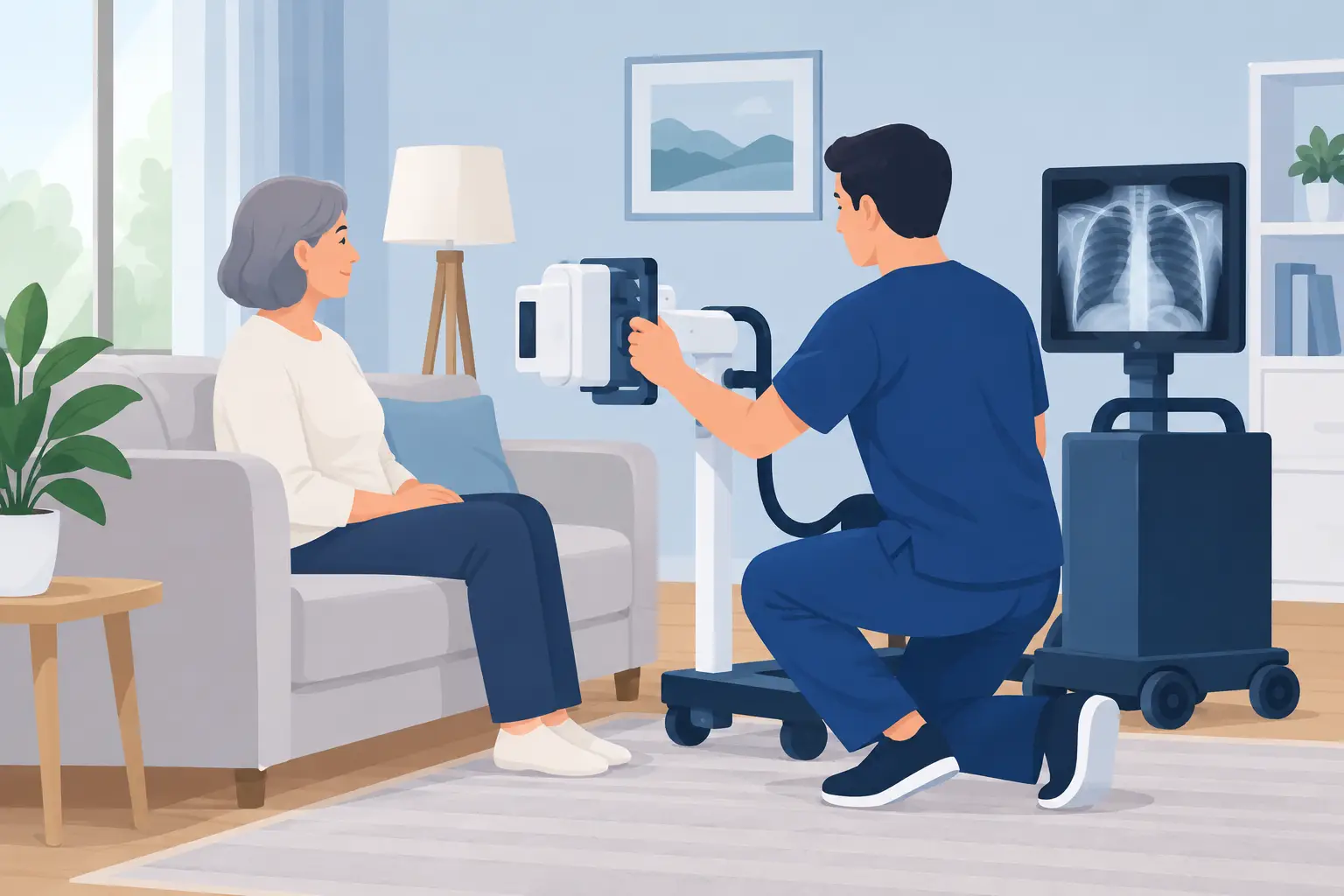
A mobile X-ray service sends a qualified imaging technologist to a patient’s home, bedside, residential care setting, or other appropriate location with portable imaging equipment. The technologist performs the ordered exam, then the images are transmitted securely for interpretation by a radiologist or other authorized clinician, depending on the care model and local requirements.
This approach is especially useful when transportation is a barrier. That may include older adults, people with limited mobility, patients recovering from surgery or illness, people receiving care in skilled nursing or assisted living settings, and caregivers balancing work and family responsibilities. Instead of arranging transportation, waiting at a facility, and managing a return trip, the exam happens where the patient already is.
Common mobile X-ray exams may include imaging of the chest, ribs, spine, pelvis, hip, shoulder, arm, hand, leg, ankle, or foot. A clinician might order an exam to assess a suspected fracture, evaluate certain respiratory symptoms, monitor a known condition, or investigate ongoing pain after an injury. The exact exams available depend on the provider, location, clinical order, and the patient’s needs.
When an at-home X-ray may make sense
The best candidates are usually stable patients who have a valid imaging order and can be safely assessed outside an emergency department. For example, an older adult who twisted an ankle at home may need an X-ray but may not be able to navigate a crowded waiting room. A patient with mobility limitations and a persistent cough may need a chest image as part of a clinician-directed evaluation. A facility resident may need imaging without the disruption of arranging a medical transport.
Convenience is a meaningful benefit, but it is not the only one. At-home imaging can also support continuity of care when the ordering clinician, imaging team, and follow-up care are coordinated. When results are routed promptly to the right clinician, the next decision - whether that is supportive care, a medication change, a referral, or an in-person evaluation - can happen with less fragmentation.
For families, the value is often practical. There may be no need to take time off work, find an accessible vehicle, arrange childcare, or ask a medically fragile person to wait in an unfamiliar setting. Privacy and comfort can matter, too, particularly for patients who are anxious about travel or have difficulty leaving home.
What happens during a mobile X-ray visit
A mobile X-ray visit begins with an order from a licensed clinician. Depending on the service, this may come from a patient’s primary care provider, an urgent care clinician, a telehealth visit, or a facility medical team. The order identifies the body area to be imaged and the clinical reason for the exam.
Before the appointment, the service may confirm the patient’s location, mobility needs, contact information, insurance details or self-pay arrangements, and any preparation instructions. Most standard X-rays require little preparation. Patients may be asked to remove jewelry, belts, or clothing with metal near the area being imaged. Comfortable, loose-fitting clothing can make the visit easier.
At the appointment, the technologist verifies the patient’s identity and explains the exam. Portable equipment is positioned carefully, and the technologist may ask the patient to sit, stand, lie down, hold still, or briefly hold their breath. Positioning can be adapted for patients who cannot easily transfer from a bed or chair, although image quality and the type of exam can sometimes be affected by limited movement.
The imaging portion is typically brief. The technologist does not usually diagnose the image during the visit. Images are reviewed by the appropriate interpreting clinician, and results are sent to the ordering provider or care team. Ask when and how you should expect results, and who to contact if symptoms worsen before you hear back.
Safety, quality, and privacy at the bedside
X-rays use ionizing radiation, but diagnostic exams use the lowest exposure appropriate for the clinical question. The technologist follows established safety practices, including appropriate positioning, shielding practices when indicated, and limiting unnecessary exposure. Tell the ordering clinician and technologist if the patient is pregnant or may be pregnant so the exam can be considered carefully.
Quality also depends on more than the equipment. A dependable mobile imaging program needs trained technologists, reliable image transmission, clear patient identification procedures, appropriate clinical documentation, and secure handling of protected health information. The setting may be a living room or bedside, but the standard of care should remain clinical and organized.
That coordination matters when imaging is only one part of the patient’s care. Bayford Health’s care model is built around connecting virtual clinical support, diagnostics, and patient access so patients are not left trying to coordinate separate services on their own.
When home imaging is not the right setting
Mobile services have real limits, and recognizing them protects patients. An at-home X-ray is not appropriate for symptoms that could signal an emergency. Call 911 or seek emergency care for chest pain, severe trouble breathing, signs of stroke, uncontrolled bleeding, loss of consciousness, a major injury, a visibly deformed limb, or sudden confusion.
It may also not be the best option when a patient needs advanced imaging such as CT, MRI, ultrasound, or specialized fluoroscopy. Some injuries need immediate hands-on treatment, splinting, reduction, laboratory testing, or specialist evaluation that cannot wait for an outpatient result. A clinician can help determine whether mobile X-ray, an imaging center, urgent care, or an emergency department fits the situation.
There are logistical trade-offs as well. Service availability can vary by geography, appointment timing, staffing, insurance coverage, and the type of exam ordered. For an otherwise mobile patient who can get a same-day appointment at a nearby imaging center, traveling to the center may sometimes be faster. The right choice depends on clinical urgency, safety, mobility, and local access.
Questions to ask before scheduling
Before arranging a visit, confirm that an imaging order is in place and ask whether mobile X-ray is clinically appropriate. It is also helpful to ask what body areas can be imaged, whether the service comes to your specific location, how images are interpreted, and when the ordering clinician will receive the report.
Ask about cost early. Coverage varies by health plan and by whether the service is considered in-network, medically necessary, or subject to a separate mobile-service fee. If a patient lives in a facility, clarify who will coordinate access to the room, assist with transfers if needed, and receive the results.
Finally, make a plan for changes in symptoms. If pain, breathing, weakness, fever, swelling, or confusion becomes more severe, do not wait for a scheduled imaging visit or a routine callback. The safest care setting can change quickly.
Mobile X-ray is most useful when it removes a barrier without compromising the care a patient needs. For qualifying patients, bringing imaging to the bedside can turn a difficult clinic trip into a coordinated next step - healthcare that meets life where it is.


Comments