
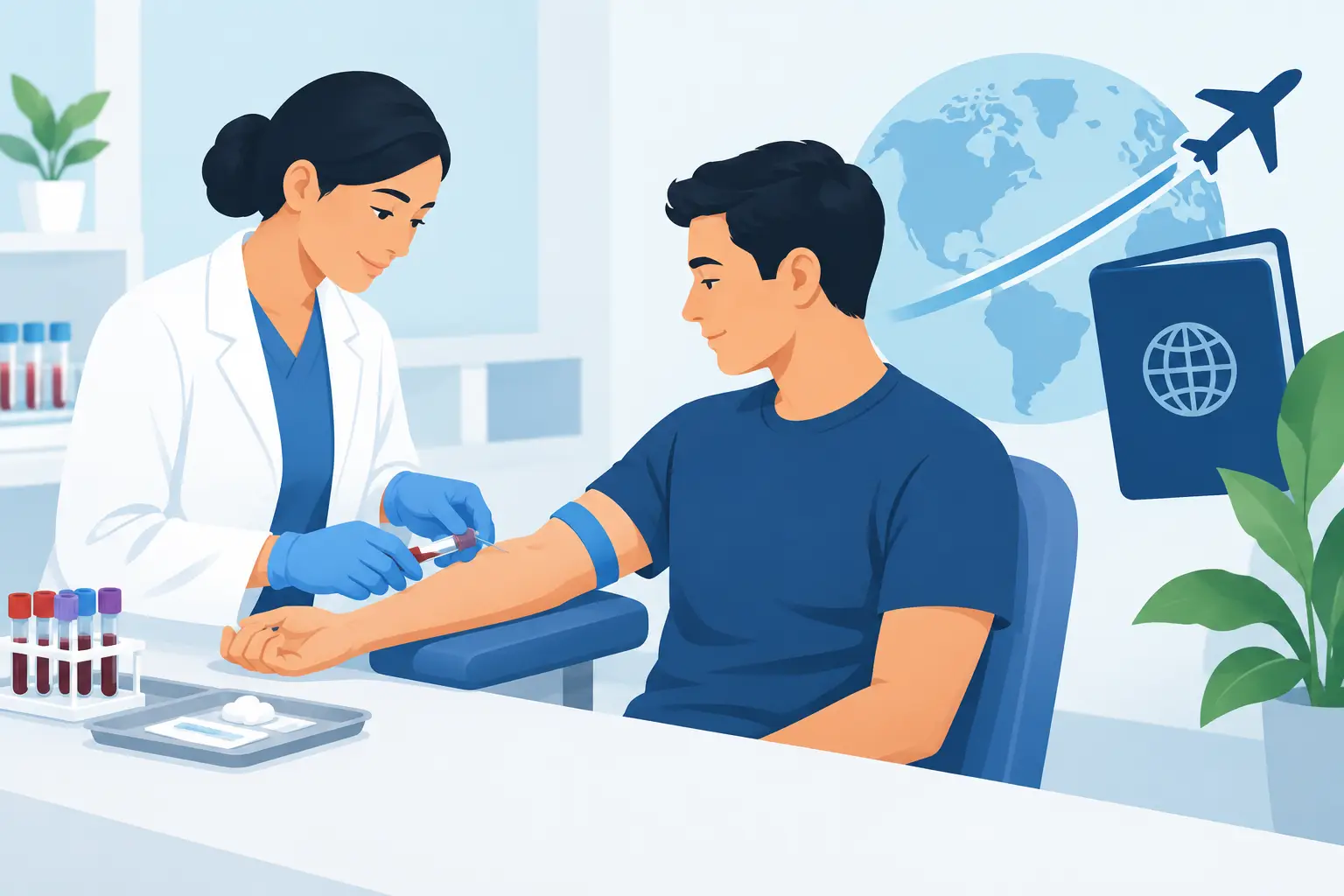
Immigration Blood Test Near Me: What to Know
A search for an immigration blood test near me usually comes with a deadline. You may have a civil surgeon appointment scheduled, a workday you cannot easily leave, or an immigration medical exam that needs to move forward without another round of paperwork. The fastest path is not simply finding the closest lab. It is finding a collection option that understands the documentation, timing, and specimen-handling requirements tied to your immigration process.
For many applicants, immigration testing is one part of a larger medical examination required by U.S. Citizenship and Immigration Services, or USCIS. Knowing who orders the tests, what your lab can provide, and how results are handled can prevent delays when your paperwork is reviewed.
What an immigration blood test may include
The exact tests required for an immigration medical examination are determined by USCIS requirements and the examining civil surgeon. In many cases, the medical exam includes laboratory screening for conditions such as syphilis and gonorrhea. Depending on your age, medical history, examination requirements, and the civil surgeon's clinical judgment, other testing may also be needed.
The phrase “immigration blood test” can be slightly misleading because not every required immigration laboratory test uses blood. A blood draw may be required for some screening, while other tests may require urine collection or other specimen types. Your civil surgeon should tell you exactly which tests are needed and provide any required order, referral, or instructions.
That distinction matters. A convenient lab location is useful, but the collection team must receive clear, correct instructions. If a test is completed without the required order, using the wrong specimen type, or outside the civil surgeon's requested process, you may have to repeat it.
Start with the civil surgeon's instructions
A USCIS-designated civil surgeon is responsible for completing the immigration medical examination and the related Form I-693 when applicable. The laboratory collects specimens and processes testing, but it does not replace the civil surgeon or independently complete your immigration medical paperwork.
Before scheduling a draw, review the instructions you received. Confirm the test names, whether the civil surgeon has sent an order directly, where results should be delivered, and whether you need to bring identification or paperwork to the appointment. If you are uncertain, ask the civil surgeon's office before collection rather than guessing.
It is also smart to ask about timing. Some results return quickly, while others can take longer depending on the test and laboratory workflow. Your civil surgeon may need to review the results before finalizing your exam documentation. Scheduling collection early enough to allow for processing and review can reduce last-minute pressure.
Questions to ask before you book
You do not need a long checklist, but a few direct questions can save time. Ask whether the location can perform each test on your order, whether an appointment is required, and whether your civil surgeon needs results sent in a specific way. If privacy, mobility, caregiving, or work hours are concerns, ask whether mobile collection or after-hours availability is an option.
Also verify the expected out-of-pocket cost before the appointment. Immigration-related laboratory testing may not be covered in the same way as routine medical care. Coverage depends on your health plan, the test ordered, the lab, and the reason for testing. A clear estimate helps you plan without surprises.
Choosing an immigration blood test near me
“Near me” should mean more than a short drive. For someone balancing a shift job, school pickup, a disability, recovery from illness, or limited transportation, access includes appointment availability and how easily the collection fits into the day.
A traditional patient service center may be the right choice when you can travel during business hours and need a straightforward draw. An after-hours laboratory center can be useful when daytime appointments are not realistic. Mobile blood draws may be worth exploring for qualifying patients who need collection at home, at work, or in another appropriate setting.
The best option depends on the tests ordered and local service availability. Not all tests can be collected in every setting, and some specimen requirements may call for a specific facility or collection process. Mobile service is convenient, but it is not automatically the best choice if your order requires immediate processing, additional services, or a particular lab workflow.
Bayford Health provides immigration laboratory testing with access options designed around real schedules, including mobile collection for qualifying patients and after-hours laboratory access in South San Francisco. The goal is practical coordination: certified collection, appropriate specimen handling, and a clearer path between your appointment and the next step in your care.
How to prepare for the appointment
Follow the instructions on your order first. Most immigration-related blood testing does not require fasting, but requirements vary by test. Do not fast, stop medication, or make changes to your routine unless the ordering clinician specifically tells you to do so.
Bring a government-issued photo ID and the paperwork or order requested by the civil surgeon or laboratory. Make sure your name and date of birth match across your ID, order, and immigration documents. Even a small mismatch can create administrative follow-up at the worst possible time.
If you have had fainting, difficult draws, anxiety around needles, or a history of bruising, tell the phlebotomist before collection begins. A certified phlebotomist can help you get positioned comfortably and explain what will happen. Drinking water beforehand, unless you were told otherwise, can also make a routine blood draw easier for some people.
For a mobile appointment, prepare a clean, well-lit area with a stable chair or table. You do not need to create a clinical environment at home, but the collection professional needs enough space to work safely and protect your privacy. If your test includes a urine specimen or paperwork that must be reviewed, confirm those details in advance.
What happens after your specimen is collected
Once your sample is collected, the next steps should be clear. The specimen is labeled, prepared, and transported according to laboratory handling requirements. Results are then processed and delivered through the appropriate workflow, which may involve the ordering civil surgeon, the patient, or both.
Avoid assuming that a completed blood draw means your immigration medical exam is finished. Your civil surgeon must review the relevant results, complete the exam requirements, and determine whether anything further is needed. If a result requires follow-up, that does not automatically mean there is a problem with your immigration case. It may mean the clinician needs clarification, repeat testing, treatment documentation, or an additional evaluation.
Keep copies of payment receipts, appointment confirmations, and any instructions you receive. Do not open or alter sealed medical documents if your civil surgeon gives you a sealed packet for submission. Ask the office how you will receive updates and what to do if you have not heard back within the expected timeframe.
When convenience needs clinical coordination
Fast access is valuable, but immigration testing should not be treated like an ordinary walk-in errand. The collection site, testing laboratory, and civil surgeon each have a different role. When those roles are coordinated, patients spend less time repeating tests, tracking paperwork, or trying to explain requirements between disconnected offices.
This is especially relevant for families, people working nontraditional hours, and applicants who cannot easily make multiple daytime trips. A care model that can combine virtual support, certified mobile collection, and after-hours lab access may reduce the logistical burden. Still, availability, test eligibility, and order requirements should always be confirmed before an appointment is arranged.
Your immigration process already asks you to manage forms, dates, appointments, and personal records. Choose a testing option that gives you clear instructions, protects your privacy, and respects the realities of your schedule. A well-coordinated blood draw is a small step, but it can make the next one feel much more manageable.

Comments