
After Hours Blood Test Options That Fit Life
A lab order should not force you to choose between your health and the rest of your life. When work runs late, a child needs care, transportation is difficult, or symptoms start outside clinic hours, an after hours blood test can make essential diagnostic care more accessible without adding another missed day to your schedule.
Blood testing is often a straightforward part of care, but getting to the collection site is not always straightforward. The right option depends on why the test was ordered, whether you need to fast, how quickly results are needed, and whether you can safely wait for non-emergency testing.
When an after hours blood test makes sense
Evening or after-hours collection can be a practical fit for routine, time-sensitive, and follow-up lab work. You may need blood drawn after a virtual care visit, before returning to work the next day, or when your clinician wants to monitor a condition without disrupting your normal schedule.
For many patients, the barrier is not willingness to get care. It is timing. Traditional collection hours can be difficult for people who work shifts, commute, provide caregiving, have limited mobility, or cannot easily arrange transportation during the day. Access after hours gives patients another way to complete the next clinical step while the need is still current.
It can also support continuity of care. A clinician may use blood work to help evaluate symptoms, monitor medication effects, check chronic conditions, or confirm that a treatment plan is working as expected. Completing the collection promptly can help avoid delays in review, follow-up, and next-step decisions.
An after-hours option is not always the right setting. If you have chest pain, severe trouble breathing, signs of stroke, fainting, uncontrolled bleeding, severe allergic symptoms, or another potentially life-threatening concern, seek emergency care immediately. Blood testing at a patient service center or through a mobile draw does not replace emergency evaluation.
Start with the order and timing instructions
Before scheduling collection, confirm that you have a valid lab order and understand the instructions from your clinician. Not every test can be drawn at any hour. Some tests must be collected at a specific time of day because hormone levels, medication timing, or other factors can affect the result.
Fasting is another common consideration. Tests such as certain lipid panels or glucose-related studies may require a period without food, depending on your clinician's instructions and the laboratory's requirements. Water is often permitted, but do not assume. Ask how long you should fast, whether you should take regular medications, and whether coffee, vitamins, supplements, or exercise could affect the test.
If your order includes a timed medication level, be especially precise. A blood draw may need to occur before a dose, after a dose, or at a particular interval. A convenient appointment is only useful if the collection time also supports an accurate result.
Bring the details that keep collection moving
A smooth appointment usually begins before the needle is ever opened. Have your photo ID, insurance information if applicable, lab order, and clinician contact information available. If your care involves an employer program, research study, immigration-related testing, or another specialized workflow, confirm any additional documents or identification requirements in advance.
For virtual care, make sure the clinician has sent the order to the correct collection service. It is also helpful to ask how results will be delivered and who will review them. The blood draw is one part of the process. Clear result routing helps your care stay connected.
Choosing between a local after-hours lab and a mobile draw
The best setting comes down to your needs, the test requirements, and logistics. An after-hours laboratory patient service center can work well when you can travel safely and your test can be processed through the site's established collection workflow. It offers a dedicated setting for specimen collection outside conventional daytime hours.
A mobile blood draw can be a better fit when travel is the problem. This may include patients recovering at home, older adults, people with disabilities or mobility limitations, busy caregivers, or employees who need collection coordinated at a workplace. Mobile collection can also be useful in facilities where moving a patient to an outside lab would create unnecessary friction.
There are trade-offs. Mobile service may require scheduling lead time, confirmation that the location is appropriate for collection, and coordination around specimen pickup or shipping. A local patient service center may offer more immediate availability, but still requires transportation and may not be available in every community. The key is to select an option that protects specimen quality while fitting the reality of your day.
In South San Francisco, Bayford Health provides after-hours laboratory access alongside mobile blood draw support for qualifying patients. This coordinated approach can be particularly helpful when a virtual visit, specimen collection, and clinical follow-up need to work together rather than operate as separate tasks.
What happens during the appointment
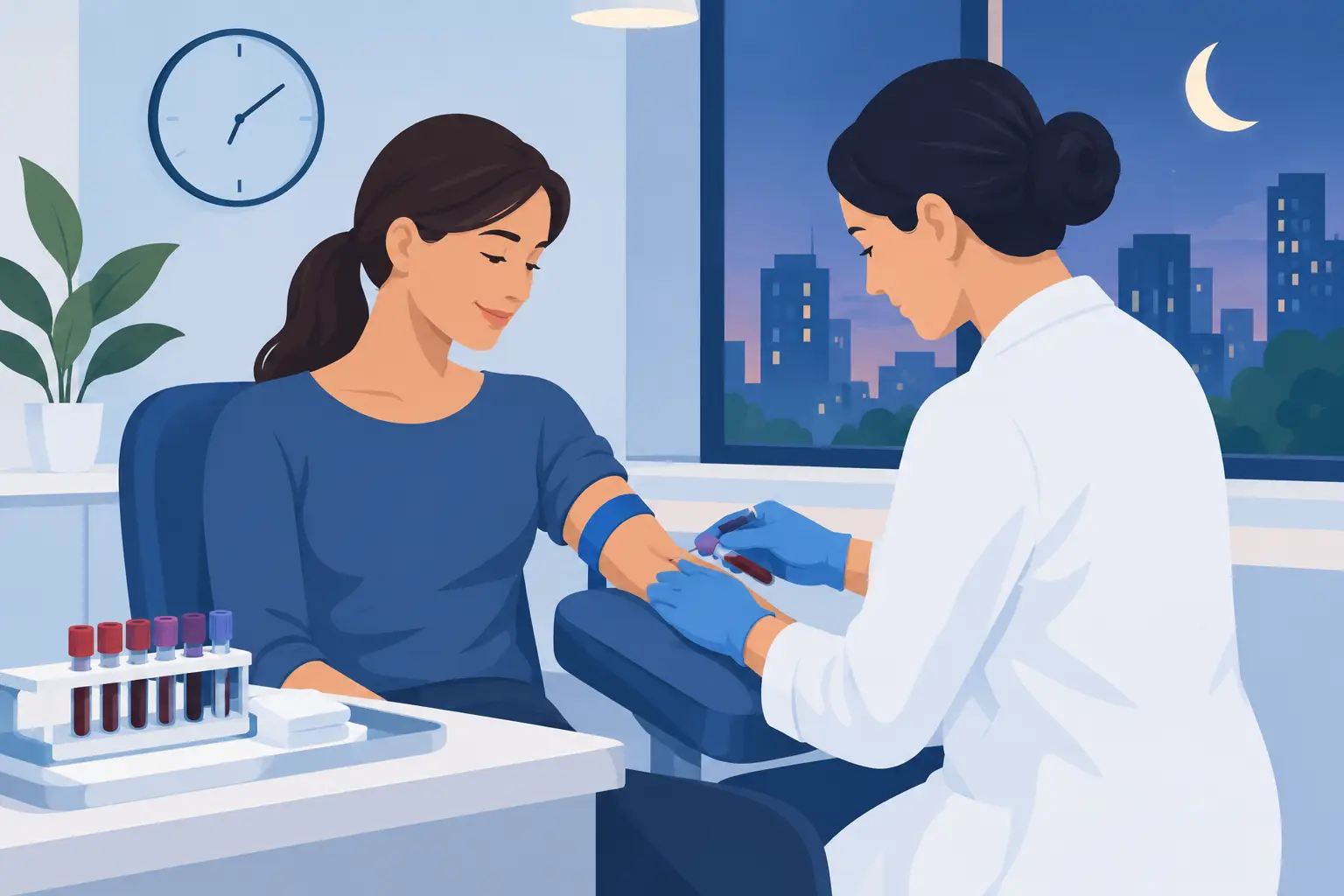
A certified phlebotomist will verify your identity, review the order, and confirm any collection instructions before drawing blood. They may ask whether you have had trouble with blood draws in the past, take certain medications, are fasting, or feel lightheaded around needles. Share that information openly. Small adjustments, such as drawing blood while you are reclined, can make the experience safer and more comfortable.
The collection itself usually takes only a few minutes. Afterward, pressure is applied to the site, followed by a bandage. Mild soreness or a small bruise can happen and often resolves on its own. Keep the bandage on for the recommended time, drink water, and avoid heavy lifting with that arm right away if you tend to bruise easily.
What matters behind the scenes is just as important. Labels must match the patient and order, collection tubes must be handled correctly, and specimens may need temperature controls, timed transport, processing, or shipment. These details protect the integrity of the sample and help reduce the chance that you will need to return for a redraw.
Plan for results, not only the draw
Some results may be available quickly, while others take longer because they require specialized processing. Timing can also depend on when the specimen reaches the testing laboratory. Ask what to expect, especially if the order is connected to a procedure, medication decision, travel requirement, or urgent clinical question.
Do not try to interpret unexpected results alone. A value outside a reference range does not automatically mean there is a serious problem. Results need to be considered alongside your symptoms, medical history, medications, and the reason the test was ordered. Your clinician can explain what the findings mean for you and whether repeat testing, treatment, or additional evaluation is needed.
If you have worsening symptoms while waiting, contact your clinician or seek urgent or emergency care based on the severity of your condition. Lab results are useful clinical information, but they are not a reason to ignore how you feel.
After-hours access should still feel like coordinated care
Convenience should not mean a disconnected experience. Whether blood is collected at home, at work, in a facility, or at an after-hours lab location, patients benefit when the people collecting the specimen, reviewing the order, and following up on results work from a clear, secure process.
For families and individuals with demanding schedules, completing a blood draw after hours can remove one practical barrier to staying on top of care. Ask the right preparation questions, choose a setting that works for your circumstances, and make sure you know who will receive and review your results. Healthcare should arrive where life already is, including after the usual clinic day has ended.


Comments