
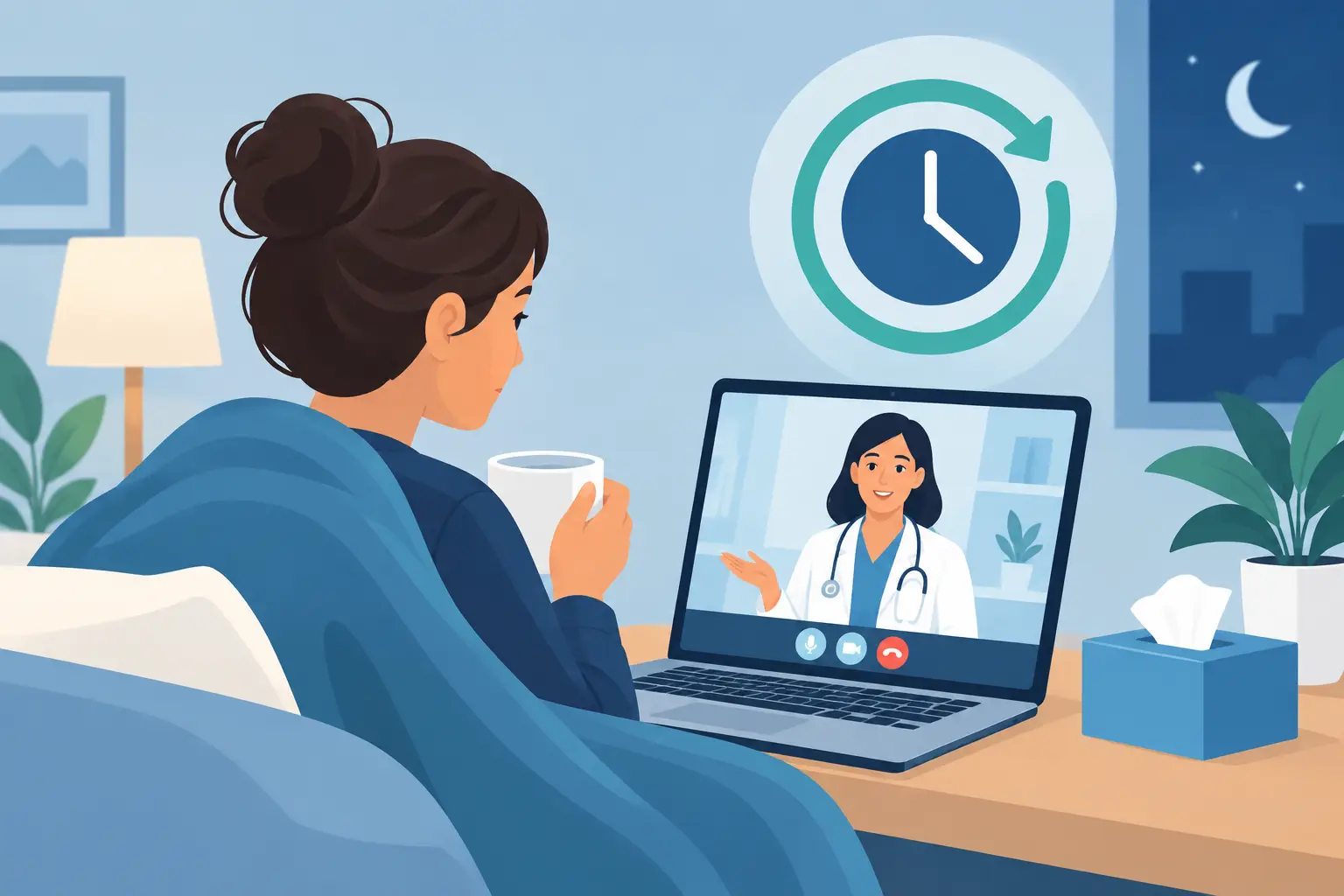
When 24 Hour Virtual Urgent Care Makes Sense
A fever that rises after bedtime, a painful rash during a business trip, or a lingering cough when every local office is closed can leave people with an uncomfortable choice: wait and worry, or spend hours in an emergency department. 24 hour virtual urgent care creates a practical third option for many non-emergency concerns. It connects patients with a qualified clinician after hours, from home, work, a hotel room, or wherever care is needed.
For busy families, caregivers, shift workers, and people with limited mobility, the value is not only speed. It is having a clear next step when a health concern does not fit neatly into clinic hours. The right virtual care experience helps patients understand what can be handled remotely, what needs testing or an in-person follow-up, and when emergency care is the safer choice.
What 24 Hour Virtual Urgent Care Is Designed to Do
Virtual urgent care is for new, non-life-threatening health concerns that need timely clinical attention. A video or phone visit allows a clinician to hear symptoms, review relevant health history, look at visible concerns such as skin changes or eye redness, and recommend treatment or follow-up.
Many common issues can begin with a virtual evaluation. These may include cold and flu symptoms, seasonal allergies, sore throat, pink eye symptoms, urinary discomfort, minor skin conditions, mild stomach upset, medication questions, and certain work or school clearance needs. A clinician may recommend home care, prescribe medication when clinically appropriate, or arrange the next level of support.
The key word is "begin." A virtual visit is not meant to force every health concern into a screen-based appointment. It is a clinical starting point that can reduce unnecessary travel while making sure patients are not left without direction after hours.
When a Virtual Visit Is a Good Fit
A virtual visit often makes sense when symptoms are uncomfortable or concerning but stable. Someone who develops a sore throat late at night, for example, may not need an emergency department. A clinician can assess the symptom pattern, ask about fever and exposure history, and determine whether testing, medication, or watchful waiting is appropriate.
It can also be useful when access barriers are the real problem. Parents may not be able to leave sleeping children at home. A person recovering from surgery may have difficulty getting to a clinic. Employees working overnight shifts may need care when traditional offices are unavailable. In these situations, healthcare should arrive where life already is.
Virtual urgent care is especially useful for deciding what to do next. Some symptoms require lab work, imaging, or an in-person exam to reach a diagnosis. Rather than guessing or delaying care, patients can speak with a clinician who can identify the appropriate path. Coordinated services matter here: a virtual visit is more useful when it can connect to diagnostic collection, imaging support, or ongoing primary care instead of ending with a vague instruction to find help elsewhere.
What Happens During an After-Hours Virtual Visit
The appointment usually starts with a secure intake that captures symptoms, medical history, current medications, allergies, and any relevant photos or records. During the visit, the clinician asks focused questions and may ask the patient to check a temperature, describe pain, show a rash on camera, or perform simple movements.
The clinician then explains the care plan in plain language. That may mean supportive care at home, a prescription sent to a pharmacy, a referral for testing, or a recommendation to be seen in person. Good virtual care does not overpromise certainty when an exam or test is needed. It gives patients a clinically grounded plan and explains what symptoms should prompt a change in that plan.
For people who need diagnostics, logistics can be the difference between a plan and actual care. Bayford Health coordinates virtual clinical support with options such as mobile blood draws, after-hours laboratory access in South San Francisco, and bedside mobile X-ray services for qualifying patients. This coordinated model helps reduce the back-and-forth that often follows an after-hours visit.
When Virtual Urgent Care Is Not the Right Choice
A virtual visit is not a substitute for emergency care. Call 911 or go to the nearest emergency department for chest pain, severe trouble breathing, signs of stroke, major bleeding, loss of consciousness, seizures, severe allergic reactions, or thoughts of self-harm. The same applies to serious injuries, sudden confusion, or symptoms that feel rapidly worse or unsafe.
There are also less dramatic situations that may still require hands-on evaluation. Severe abdominal pain, possible broken bones, deep cuts, persistent high fever, dehydration, or a worsening infection may need an exam, imaging, or treatment that cannot be delivered through a screen. Virtual care can still help determine urgency, but patients should follow the clinician's recommendation to seek in-person care without delay.
For infants, older adults, pregnant patients, and people with complex medical conditions, the right setting depends more heavily on the specific symptoms. A clinician can consider those factors during an urgent virtual consultation, but a lower threshold for in-person evaluation is often appropriate.
The Difference Between Convenience and Continuity
Fast access is valuable, but speed alone does not make care better. A disconnected virtual visit can leave patients repeating their story, tracking down orders, or trying to explain the visit to a different provider later. The better experience is one where clinical information, follow-up instructions, and diagnostic needs are handled with continuity.
That matters for employers and caregivers, too. When an employee needs timely help after a late shift or a family member needs care at home, the goal is not simply to get a video appointment. The goal is to resolve the next step efficiently and safely, with privacy and appropriate documentation.
A coordinated provider can make that transition easier by operating under consistent clinical standards across virtual visits, laboratory collection, mobile diagnostics, and patient records. HIPAA-compliant workflows and credentialed clinical staff are operational details, but they directly affect a patient's experience. They help ensure that sensitive information and specimens are handled carefully, and that care recommendations do not get lost between services.
How to Prepare for a Better Virtual Urgent Care Visit
A few minutes of preparation can make an after-hours visit more productive. Have a photo ID, insurance information if applicable, a list of medications, allergies, and a brief timeline of symptoms available. If you have a thermometer, blood pressure cuff, pulse oximeter, or other home device, record the readings before the visit and share them with the clinician.
It also helps to choose a private, well-lit space with a reliable internet connection. For a skin concern, good lighting can help the clinician assess color, spread, and location. For a child or someone needing help communicating symptoms, having a caregiver present can provide useful details about changes in behavior, eating, sleep, or pain.
Be direct about what is worrying you most. Mention recent travel, exposure to illness, new medications, pregnancy, chronic conditions, and any symptom that has suddenly changed. Virtual care works best when patients have enough information to make a safe decision with their clinician.
Care That Fits the Hours Life Actually Keeps
Health concerns do not wait for an open appointment, and not every after-hours symptom belongs in an emergency department. 24 hour virtual urgent care gives people a way to speak with a clinician promptly, understand their options, and move toward the right level of care.
The most useful question is not, "Can this be handled online?" It is, "What care do I need next, and how can I get there safely?" When virtual care is connected to real clinical follow-up, diagnostics, and clear escalation guidance, it can make that answer easier to reach at any hour.


Comments