
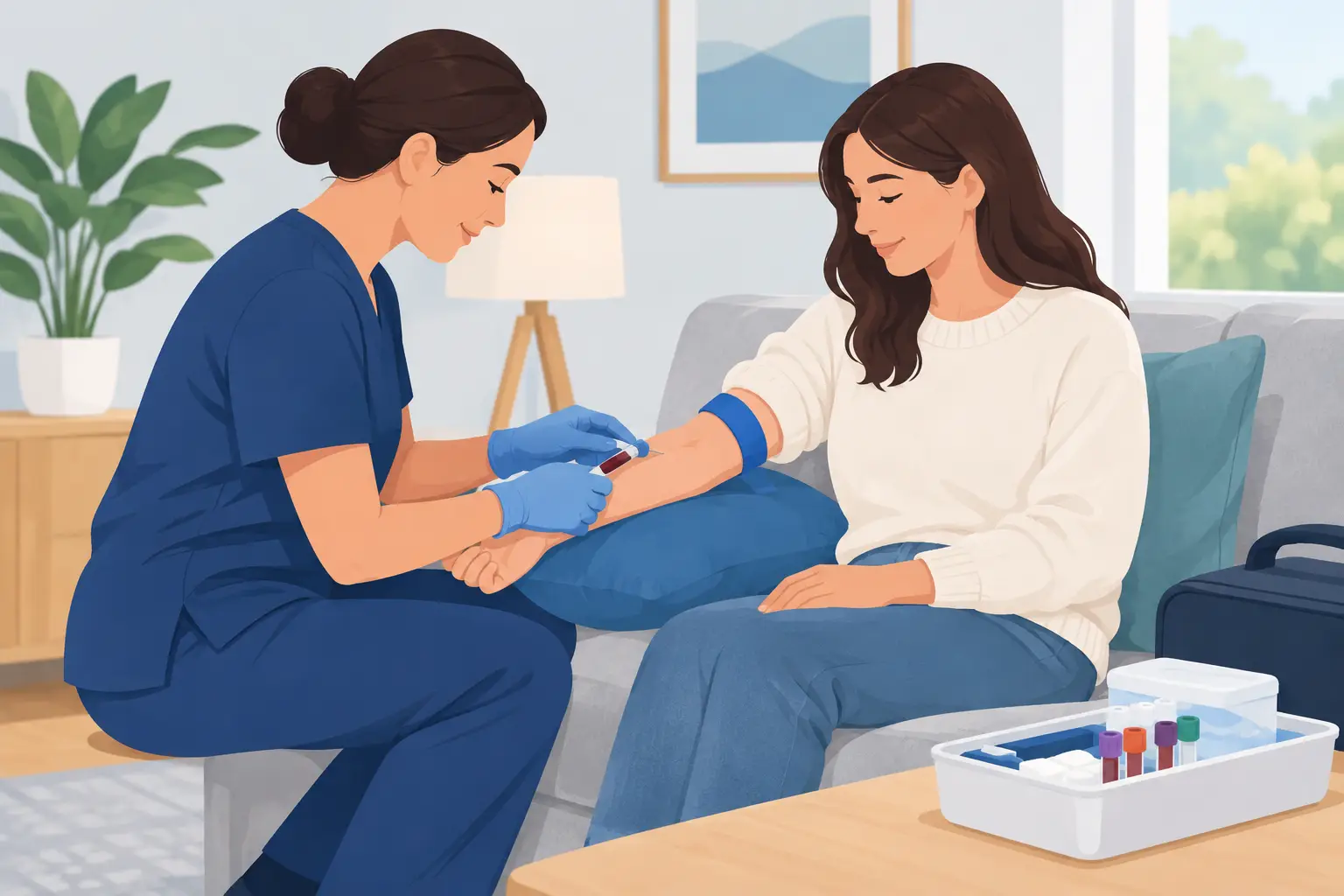
What to Expect From a Mobile Blood Draw at Home
A lab order can be simple on paper and difficult in real life. Getting to a collection site may mean taking time off work, arranging transportation, bringing a child along, or asking a caregiver to change plans. A mobile blood draw at home moves the collection step to a place that already works for you, while keeping the clinical process focused on safe, accurate specimen collection.
For many people, this is not about avoiding healthcare. It is about making healthcare possible on the day it is needed. Routine monitoring, follow-up testing, pre-procedure labs, and other ordered blood work are easier to complete when travel and waiting rooms are no longer part of the equation.
What a mobile blood draw at home involves
A mobile blood draw is an appointment with a qualified phlebotomist who comes to an approved location, such as your home, workplace, senior living community, or bedside. The phlebotomist verifies your identity, confirms the required paperwork and test instructions, collects the specimen, labels it at the point of collection, and prepares it for appropriate transport and laboratory processing.
The appointment itself is often brief, but the planning behind it matters. A reliable service coordinates the right collection supplies, the timing of the visit, and specimen handling requirements for the tests ordered. Some samples have temperature, processing, or delivery requirements that affect when and where collection can occur.
Mobile collection is not a replacement for emergency care. If you have severe symptoms such as chest pain, trouble breathing, sudden confusion, uncontrolled bleeding, or signs of a stroke, call 911 or seek emergency care. A home blood draw is designed for scheduled diagnostic collection, not urgent stabilization or treatment.
Who may benefit from in-home blood collection
Home collection can be a practical option for people with mobility limitations, chronic conditions, recovery needs, or demanding schedules. It can also help families coordinating care for an older adult, a new parent, or someone who cannot easily leave home without assistance.
It is equally useful when the barrier is time rather than mobility. A person working a full day, caring for children, or managing several medical appointments may be more likely to complete ordered testing when collection can happen at home or another convenient setting.
For patients receiving virtual care, mobile phlebotomy can also reduce fragmentation. Instead of completing a video visit and then independently locating a lab, coordinating transportation, and tracking down results, collection can be part of a more connected care plan. Bayford Health brings virtual care, certified mobile phlebotomy, diagnostic support, and patient coordination together so the next step is clearer.
Before your appointment: the details that protect your results
Most blood draws require an order from a licensed clinician or an authorized testing program. Before booking, confirm which tests have been ordered and whether the service can collect the specific specimens required. Not every test is suitable for every mobile setting, particularly tests that require immediate processing, specialized equipment, or tightly controlled timing.
Follow any preparation instructions from your clinician. This may include fasting, drinking water, avoiding certain supplements, taking medication as directed, or scheduling the draw at a particular time of day. Do not stop prescribed medication unless the clinician who ordered the test tells you to do so.
If fasting is required, ask whether water is allowed. In many cases, staying hydrated can make a blood draw easier, but the correct instructions depend on the test. Let the care team know in advance if you have a history of fainting, difficult draws, a bleeding disorder, a port or vascular access device, or restrictions on which arm can be used.
Have a government-issued photo ID and your lab order or appointment details ready if requested. For minors, a parent or legal guardian may need to be present or provide required consent. Small steps like these prevent avoidable delays at the door.
What happens during the visit
A professional home collection visit should feel organized, respectful, and private. The phlebotomist will confirm your identity using standard identifiers and review the requested tests before collecting anything. This verification is a key patient-safety step, not unnecessary paperwork.
You will usually be asked to sit in a stable chair with good arm support. Choose a clean, well-lit area with enough room for the phlebotomist to work safely. If you are prone to dizziness or fainting, mention it before the draw. The phlebotomist can help position you appropriately and provide instructions for staying safe during and after collection.
The collection process is much like one at a laboratory patient service center. The site is cleaned, blood is drawn into the needed tubes, and specimens are labeled in your presence. You may feel a quick pinch, mild pressure, or temporary soreness afterward. Bruising can happen, especially for people with fragile veins or those taking certain medications.
After the draw, apply pressure to the site as directed and keep the bandage on for the recommended time. Avoid heavy lifting with that arm right away if the area is sore. If bleeding does not stop with firm pressure, or you develop significant swelling, pain, or other concerning symptoms, contact a clinician promptly.
Why specimen handling matters as much as the draw
Convenience should never come at the expense of specimen quality. A blood sample is only useful if it is collected, identified, stored, and transported according to laboratory requirements. That is why mobile service is more than sending someone with a needle to a home.
Qualified phlebotomists use appropriate collection supplies and follow established procedures for patient identification, labeling, packaging, and handoff. Depending on the test, a specimen may need to reach a laboratory within a defined window or be maintained under particular conditions. The logistics are often invisible to the patient, but they directly affect whether a sample can be processed and whether results are reliable.
For healthcare organizations, research teams, employers, and event organizers, these workflows become even more important. Mobile collection at scale requires trained staffing, clear participant flow, secure documentation, compliant handling, and coordinated shipping or laboratory delivery. A collection program that looks convenient but lacks operational discipline can create redraws, missed timelines, and unnecessary patient frustration.
Questions to ask before scheduling
The right service depends on your tests, location, timing, and care needs. Before confirming a visit, ask whether your specific lab order is eligible for mobile collection, what preparation is required, and how results will be delivered. You may also want to confirm pricing, insurance options when applicable, cancellation policies, and whether there is an added travel fee.
Ask how the service protects privacy and handles your health information. Home collection should still follow the same expectation of discretion and appropriate safeguards that patients expect in a clinical setting. If another person will be present during the appointment, decide ahead of time what level of privacy you prefer.
It is also reasonable to ask about credentials. Collection should be performed by trained, qualified professionals operating within applicable requirements. If your draw is part of care from a physician, telehealth provider, or specialty practice, confirm how the ordering team will receive and review the results.
A more workable path to routine care
A mobile blood draw at home is not the best fit for every laboratory test or every situation. Some testing is better completed at a laboratory facility because of equipment, timing, or processing needs. But for eligible patients and ordered tests, home collection can remove one of the most common reasons care gets delayed: the difficulty of getting there.
When healthcare arrives where life already is, completing a necessary lab order can feel less like another logistical hurdle and more like a manageable part of staying well. The best next step is simply to ask whether your ordered testing can be collected at home and what preparation will help your appointment go smoothly.


Comments